MEG Vision x AI
CES 2025 Hidden Gems for everyone.
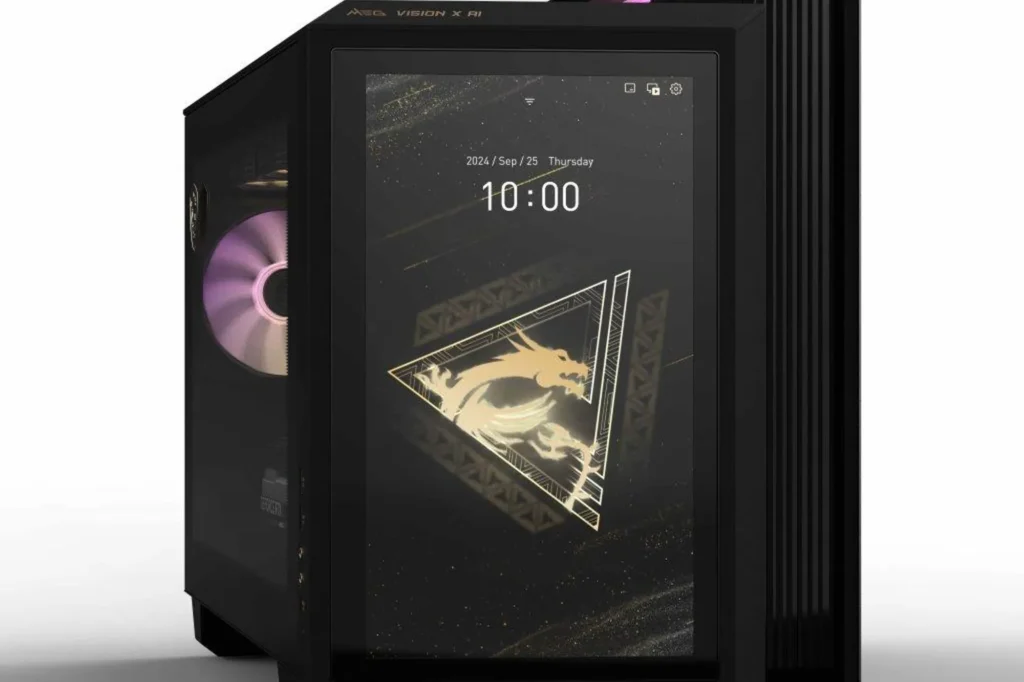
The MEG Vision X AI represents MSI’s flagship desktop gaming PC equipped with cutting-edge artificial intelligence technologies. It boasts a novel 13-inch touchscreen display known as “AI HMI,” deeply integrated with AI-powered features such as Microsoft Copilot for voice commands and autonomous tools like MSI AI Artist.
Leveraging AI-driven thermal management, the system intelligently adjusts fan speeds to optimize cooling efficiency while minimizing noise levels. Additionally, the screen doubles as a secondary monitor, offering unprecedented flexibility. With state-of-the-art Intel processors, integrated Neural Processing Units (NPUs), and top-tier NVIDIA graphics, the Vision X AI sets new benchmarks for what a personal computer can achieve.
IL1A – AI-based olfactory digital sniffer dog system

IL1A is a sophisticated device capable of detecting diverse odors. By sampling air surrounding individuals, it converts olfactory data into digital format using multichannel gas sensor arrays. Integrated AI systems then automatically compare these results against extensive databases, drawing conclusions accordingly.
Notably, IL1A can identify specific scents emitted by humans during illness, which vary depending on the condition, alongside environmental gases and medication-related aromas.
Ballie
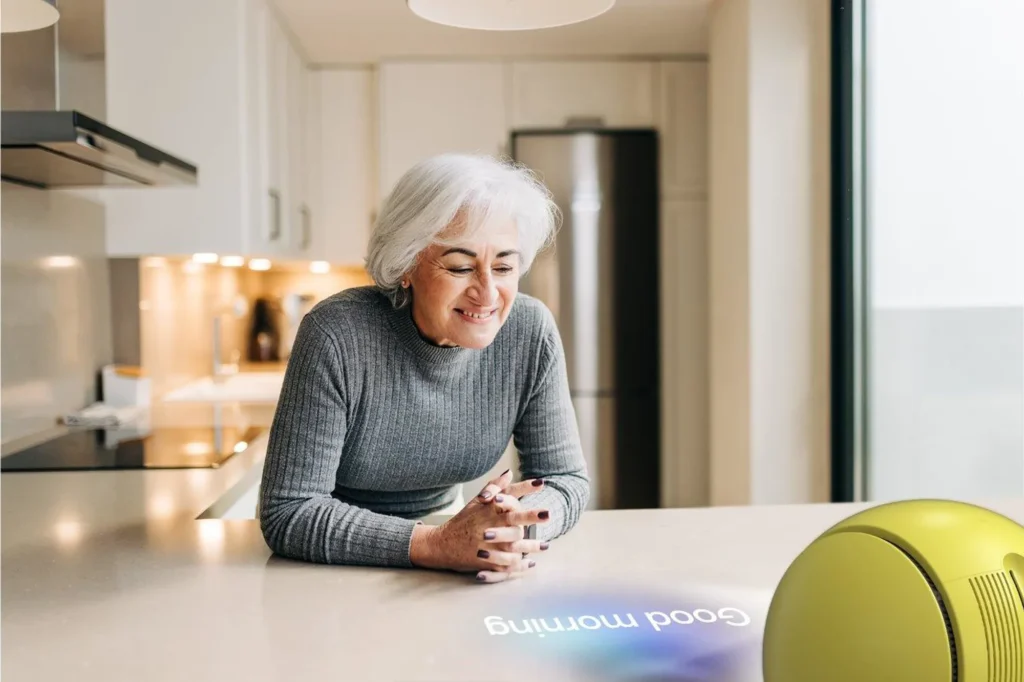
Ballie is an autonomous mobile domestic robot designed to serve multiple purposes such as companionship, health monitoring, and entertainment provision. Equipped with both verbal interaction capabilities and a video projector for displaying multimedia content, it enhances its utility further by integrating with smart home appliances, facilitating their operation at the user’s convenience.
Initially unveiled in 2020, subsequent advancements in Artificial Intelligence have prompted the company to introduce an upgraded version of this companion robot. Enhanced with new Vision AI functionalities, the updated model promises heightened performance and versatility, reinforcing its position as a reliable assistant within modern households.
In 2025, the innovative Ballie companion robot takes another leap forward in intelligence due to enhanced artificial intelligence integrations, solidifying its role as an indispensable tool for navigating the hectic rhythms of daily life.Ballie serves as a fully-autonomous, mobile domestic robot equipped with capabilities ranging from companionship and health surveillance to providing entertainment. Its interactive functionality includes vocal communication along with visual projection and audiophonic reproduction enabled by a built-in video projector and high-fidelity audio output.
Furthermore, it utilizes voice analysis, facial recognition, and conversational learning algorithms to adapt dynamically to individual preferences, thus executing tailored tasks suited specifically to each user.
Final Thoughts: From Vegas Hype to Istanbul Reality
Wrapping up my time at CES 2025, I’m left with a mix of exhaustion and genuine excitement. Walking the floor, it’s easy to get blinded by the neon and the marketing fluff, but the real “hidden gems” this year taught me something important: the AI revolution is finally moving into the background. It’s becoming less about a chatbot window on a screen and more about the invisible intelligence embedded in our devices.
While my dual RTX 4080 rig back in Istanbul remains the “heavy lifter” for my research, seeing these localized, highly efficient NPU-driven gadgets was a wake-up call. We are entering an era of “Edge Autonomy” where our personal tech won’t just follow commands—it will anticipate our needs without ever “phoning home” to a cloud server.
CES 2025 proved that the future isn’t just about massive clusters of GPUs; it’s about how that power is distilled into something we can carry in our pockets or wear on our faces. Now, it’s time to head back to the lab and see which of these breakthroughs I can actually break, hack, and integrate into my own workflows.
It is also might be interesting:
While these gadgets are impressive on the surface, their true potential is unlocked by the hardware leaps I covered in my deep dive into the AI vanguard and Blackwell architecture.
The seamless interaction of these wearables relies heavily on multimodal instruction tuning, allowing devices to process visual and textual cues in a single, coherent workflow.
The level of autonomy seen in this year’s home robotics is reaching a tipping point, moving toward the kind of adaptive agent logic seen in frameworks like AutoMind.
Leave a Reply