Category: AI Frontiers

  • Unlocking Smarter AI: How Learning Conditional Class Dependencies Boosts Few-Shot Classification

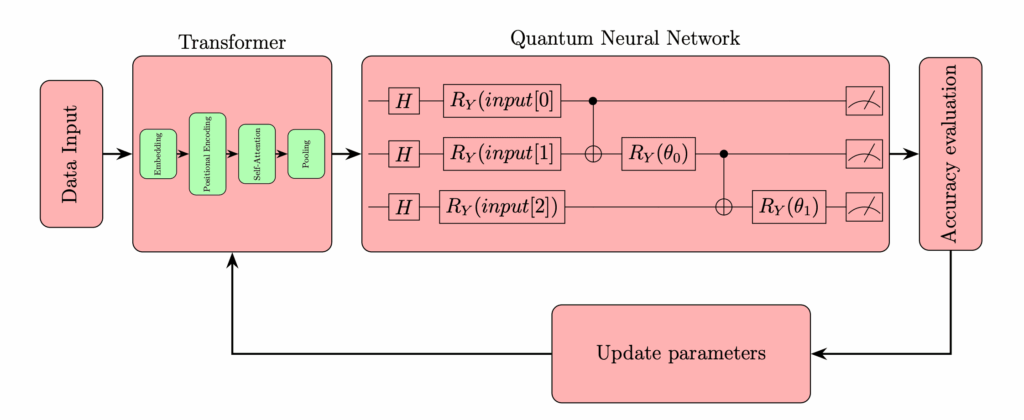
    Genetic Transformer-Assisted Quantum Neural
Networks for Optimal Circuit Design
    Genetic Transformer-Assisted Quantum Neural Networks for Optimal Circuit Design

    Imagine teaching a computer to recognize a new object after seeing just a handful of examples. This is the promise of few-shot learning, a rapidly growing area in artificial intelligence (AI) that aims to mimic human-like learning efficiency. But while humans can quickly grasp new concepts by understanding relationships and context, many AI models struggle when data is scarce.

    A recent research breakthrough proposes a clever way to help AI learn better from limited data by focusing on conditional class dependencies. Let’s dive into what this means, why it matters, and how it could revolutionize AI’s ability to learn with less.

    The Challenge of Few-Shot Learning

    Traditional AI models thrive on massive datasets. For example, to teach a model to recognize cats, thousands of labeled cat images are needed. But in many real-world scenarios, collecting such large datasets is impractical or impossible. Few-shot learning tackles this by training models that can generalize from just a few labeled examples per class.

    However, few-shot learning isn’t easy. The main challenges include:

    • Limited Data: Few examples make it hard to capture the full variability of a class.
    • Class Ambiguity: Some classes are visually or semantically similar, making it difficult to distinguish them with sparse data.
    • Ignoring Class Relationships: Many models treat classes independently, missing out on valuable information about how classes relate to each other.

    What Are Conditional Class Dependencies?

    Humans naturally understand that some categories are related. For instance, if you know an animal is a dog, you can infer it’s unlikely to be a bird. This kind of reasoning involves conditional dependencies — the probability of one class depends on the presence or absence of others.

    In AI, conditional class dependencies refer to the relationships among classes that influence classification decisions. For example, knowing that a sample is unlikely to belong to a certain class can help narrow down the correct label.

    The New Approach: Learning with Conditional Class Dependencies

    The paper proposes a novel framework that explicitly models these conditional dependencies to improve few-shot classification. Here’s how it works:

    1. Modeling Class Dependencies

    Instead of treating each class independently, the model learns how classes relate to each other conditionally. This means it understands that the presence of one class affects the likelihood of others.

    2. Conditional Class Dependency Graph

    The researchers build a graph where nodes represent classes and edges capture dependencies between them. This graph is learned during training, allowing the model to dynamically adjust its understanding of class relationships based on the data.

    3. Graph Neural Networks (GNNs) for Propagation

    To leverage the class dependency graph, the model uses Graph Neural Networks. GNNs propagate information across the graph, enabling the model to refine predictions by considering related classes.

    4. Integration with Few-Shot Learning

    This conditional dependency modeling is integrated into a few-shot learning framework. When the model sees a few examples of new classes, it uses the learned dependency graph to make more informed classification decisions.

    Why Does This Matter?

    By incorporating conditional class dependencies, the model gains several advantages:

    • Improved Accuracy: Considering class relationships helps disambiguate confusing classes, boosting classification performance.
    • Better Generalization: The model can generalize knowledge about class relationships to new, unseen classes.
    • More Human-Like Reasoning: Mimics how humans use context and relationships to make decisions, especially with limited information.

    Real-World Impact: Where Could This Help?

    This advancement isn’t just theoretical — it has practical implications across many domains:

    • Medical Diagnosis: Diseases often share symptoms, and understanding dependencies can improve diagnosis with limited patient data.
    • Wildlife Monitoring: Rare species sightings are scarce; modeling class dependencies can help identify species more accurately.
    • Security and Surveillance: Quickly recognizing new threats or objects with few examples is critical for safety.
    • Personalized Recommendations: Understanding relationships among user preferences can enhance recommendations from sparse data.

    Experimental Results: Proof in the Numbers

    The researchers tested their approach on standard few-shot classification benchmarks and found:

    • Consistent improvements over state-of-the-art methods.
    • Better performance especially in challenging scenarios with highly similar classes.
    • Robustness to noise and variability in the few-shot samples.

    These results highlight the power of explicitly modeling class dependencies in few-shot learning.

    How Does This Fit Into the Bigger AI Picture?

    AI is moving towards models that require less data and can learn more like humans. This research is part of a broader trend emphasizing:

    • Self-Supervised and Semi-Supervised Learning: Learning from limited or unlabeled data.
    • Graph-Based Learning: Using relational structures to enhance understanding.
    • Explainability: Models that reason about class relationships are more interpretable.

    Takeaways: What Should You Remember?

    • Few-shot learning is crucial for AI to work well with limited data.
    • Traditional models often ignore relationships between classes, limiting their effectiveness.
    • Modeling conditional class dependencies via graphs and GNNs helps AI make smarter, context-aware decisions.
    • This approach improves accuracy, generalization, and robustness.
    • It has wide-ranging applications from healthcare to security.

    Looking Ahead: The Future of Few-Shot Learning

    As AI continues to evolve, integrating richer contextual knowledge like class dependencies will be key to building systems that learn efficiently and reliably. Future research may explore:

    • Extending dependency modeling to multi-label and hierarchical classification.
    • Combining with other learning paradigms like meta-learning.
    • Applying to real-time and dynamic learning environments.

    Final Thoughts

    The ability for AI to learn quickly and accurately from limited examples is a game-changer. By teaching machines to understand how classes relate conditionally, we bring them one step closer to human-like learning. This not only advances AI research but opens doors to impactful applications across industries.

    Stay tuned as the AI community continues to push the boundaries of few-shot learning and builds smarter, more adaptable machines!

    Paper: https://arxiv.org/pdf/2506.09205

    If you’re fascinated by AI’s rapid progress and want to keep up with the latest breakthroughs, follow this blog for clear, insightful updates on cutting-edge research.

  • Enhancing Large Language Models with Retrieval-Augmented Generation: A Comprehensive Overview

    Enhancing Large Language Models with Retrieval-Augmented Generation
    Enhancing Large Language Models with Retrieval-Augmented Generation

    Large Language Models (LLMs) have revolutionized natural language processing by generating fluent and contextually relevant text. However, their ability to provide accurate, up-to-date, and factually grounded information remains limited by the static nature of their training data. The paper “Retrieval-Augmented Generation for Knowledge-Intensive NLP Tasks” (arXiv:2506.10975) proposes an innovative framework that combines LLMs with external knowledge retrieval systems to overcome these limitations. This article summarizes the key ideas, methodology, and implications of this approach, highlighting how it advances the state of the art in knowledge-intensive natural language processing.

    1. Motivation and Background

    • Limitations of LLMs: Despite their impressive language understanding and generation capabilities, LLMs struggle with tasks requiring up-to-date knowledge or specialized domain information not fully captured during pretraining.
    • Static Knowledge: LLMs rely on fixed training data and do not dynamically incorporate new information, which can lead to outdated or incorrect responses.
    • Need for Retrieval: Integrating external retrieval mechanisms enables models to access relevant documents or facts at inference time, improving accuracy and factuality.

    2. Retrieval-Augmented Generation (RAG) Framework

    The core idea behind RAG is to augment LLMs with a retrieval module that fetches relevant knowledge from large external corpora before generating answers.

    2.1 Architecture Components

    • Retriever: Efficiently searches a large document collection to identify passages relevant to the input query.
    • Generator: A pretrained language model that conditions its output on both the query and retrieved documents.
    • End-to-End Training: The retriever and generator are jointly trained to optimize final task performance.

    2.2 Workflow

    1. Query Input: The user provides a question or prompt.
    2. Document Retrieval: The retriever searches indexed documents and returns top-k relevant passages.
    3. Answer Generation: The generator produces a response conditioned on the retrieved passages and the input query.
    4. Output: The final generated text is more accurate and grounded in external knowledge.

    3. Advantages of RAG

    • Improved Accuracy: By accessing relevant documents, RAG models generate more factually correct and contextually appropriate answers.
    • Dynamic Knowledge: The system can incorporate new information by updating the document corpus without retraining the entire model.
    • Scalability: Retrieval allows the model to handle vast knowledge bases beyond the fixed parameters of the LLM.
    • Interpretability: Retrieved documents provide evidence supporting the generated answers, enhancing transparency.

    4. Experimental Evaluation

    The paper evaluates RAG on multiple knowledge-intensive NLP tasks, including open-domain question answering and fact verification.

    4.1 Benchmarks and Datasets

    • Natural Questions (NQ): Real-world questions requiring retrieval of factual information.
    • TriviaQA: Trivia questions with diverse topics.
    • FEVER: Fact verification dataset where claims must be checked against evidence.

    4.2 Results

    • RAG models outperform baseline LLMs without retrieval by significant margins on all tasks.
    • Joint training of retriever and generator yields better retrieval relevance and generation quality.
    • Ablation studies show that both components are critical for optimal performance.

    5. Technical Innovations

    • Differentiable Retrieval: Enables backpropagation through the retrieval step, allowing end-to-end optimization.
    • Fusion-in-Decoder: The generator integrates multiple retrieved passages effectively to produce coherent responses.
    • Efficient Indexing: Uses dense vector representations and approximate nearest neighbor search for scalable retrieval.

    6. Practical Implications

    • Updatable Knowledge Bases: Organizations can maintain fresh corpora to keep AI systems current.
    • Domain Adaptation: RAG can be tailored to specialized fields by indexing domain-specific documents.
    • Reduced Hallucination: Grounding generation in retrieved evidence mitigates fabrications common in pure LLM outputs.
    • Explainability: Providing source documents alongside answers helps users verify information.

    7. Limitations and Future Directions

    • Retriever Dependence: Quality of generated answers heavily depends on retrieval accuracy.
    • Latency: Retrieval adds computational overhead, potentially affecting response time.
    • Corpus Coverage: Missing or incomplete documents limit the system’s knowledge.
    • Integration with Larger Models: Scaling RAG with very large LLMs remains an ongoing challenge.

    Future research aims to improve retrieval efficiency, expand corpora coverage, and enhance integration with multimodal knowledge sources.

    8. Summary

    AspectDescription
    Core IdeaCombine LLMs with external retrieval to ground generation in relevant documents.
    ArchitectureRetriever fetches documents; generator produces answers conditioned on retrieved knowledge.
    BenefitsImproved accuracy, dynamic knowledge updating, better interpretability, and scalability.
    EvaluationOutperforms baselines on open-domain QA and fact verification benchmarks.
    ChallengesRetrieval quality, latency, corpus completeness, and scaling integration with large models.

    Conclusion

    Retrieval-Augmented Generation represents a significant advancement in building knowledge-aware language models. By bridging the gap between static pretrained knowledge and dynamic information retrieval, RAG systems deliver more accurate, up-to-date, and interpretable responses. This framework opens new opportunities for deploying AI in knowledge-intensive applications across domains, from customer support to scientific research. Continued innovation in retrieval methods and integration strategies promises to further enhance the capabilities of next-generation language models.

    For more details, refer to the original paper: arXiv:2506.10975.

  • Unlocking Dynamic Scene Understanding: Neural Radiance Fields for Deformable Objects

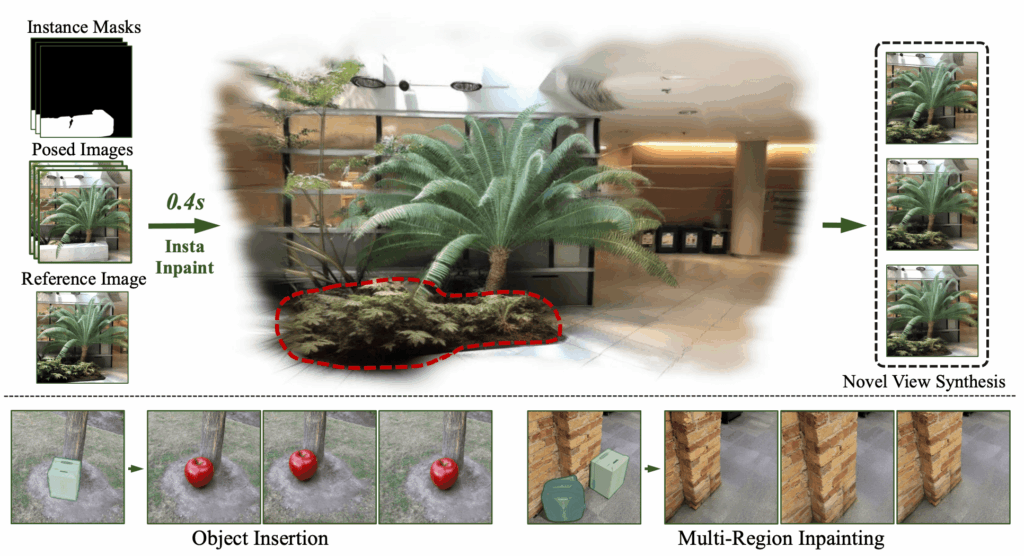
    InstaInpaint: Instant 3D-Scene Inpainting with
Masked Large Reconstruction Model
    InstaInpaint: Instant 3D-Scene Inpainting with Masked Large Reconstruction Model

    The world around us is in constant motion — people walk, animals move, objects deform. Capturing and understanding such dynamic scenes in 3D has long been a challenge in computer vision and graphics. Recently, Neural Radiance Fields (NeRF) revolutionized static 3D scene reconstruction and novel view synthesis, but handling dynamic, deformable objects remains a tough nut to crack.

    A new research paper titled “Neural Radiance Fields for Dynamic Scenes with Deformable Objects” (arXiv:2506.10980) proposes an innovative approach to extend NeRF’s capabilities to dynamic environments. This blog post breaks down the core ideas, methods, and potential applications of this exciting development.

    What Are Neural Radiance Fields (NeRF)?

    Before diving into the dynamic extension, let’s quickly recap what NeRF is:

    • NeRF is a deep learning framework that represents a 3D scene as a continuous volumetric radiance field.
    • Given a set of images from different viewpoints, NeRF learns to predict color and density at any 3D point, enabling photorealistic rendering of novel views.
    • It excels at static scenes but struggles with dynamic content due to its assumption of a fixed scene.

    The Challenge: Dynamic Scenes with Deformable Objects

    Real-world scenes often contain moving and deforming objects — think of a dancing person or a waving flag. Modeling such scenes requires:

    • Capturing time-varying geometry and appearance.
    • Handling non-rigid deformations, where objects change shape over time.
    • Maintaining high-quality rendering from arbitrary viewpoints at any time frame.

    Traditional NeRF methods fall short because they assume static geometry and appearance.

    The Proposed Solution: Dynamic NeRF for Deformable Objects

    The authors propose a novel framework that extends NeRF to handle dynamic scenes with deformable objects by combining:

    1. Deformation Fields:
      They introduce a learnable deformation field that maps points in the dynamic scene at any time to a canonical (reference) space. This canonical space represents the object in a neutral, undeformed state.
    2. Canonical Radiance Field:
      Instead of modeling the scene directly at each time step, the system learns a canonical radiance field representing the object’s appearance and geometry in the canonical space.
    3. Time-Dependent Warping:
      For each timestamp, the model predicts how points move from the canonical space to their deformed positions in the dynamic scene, enabling it to reconstruct the scene at any moment.

    How Does It Work?

    The approach can be summarized in three main steps:

    1. Learning the Canonical Space

    • The model first learns a canonical 3D representation of the object or scene in a neutral pose.
    • This representation encodes the geometry and appearance without deformation.

    2. Modeling Deformations Over Time

    • A deformation network predicts how each point in the canonical space moves to its position at any given time.
    • This captures complex non-rigid motions like bending, stretching, or twisting.

    3. Rendering Novel Views Dynamically

    • Given a camera viewpoint and time, the model:
      • Maps the query 3D points from the dynamic space back to the canonical space using the inverse deformation.
      • Queries the canonical radiance field to get color and density.
      • Uses volume rendering to synthesize the final image.

    This pipeline enables rendering photorealistic images of the scene from new viewpoints and times, effectively animating the deformable object.

    Key Innovations and Advantages

    • Unified Representation: The canonical space plus deformation fields provide a compact and flexible way to model dynamic scenes without needing explicit mesh tracking or complex rigging.
    • Generalization: The model can handle a wide variety of deformations, making it applicable to humans, animals, and other non-rigid objects.
    • High Fidelity: By building on NeRF’s volumetric rendering, the approach produces detailed and realistic images.
    • Temporal Coherence: The deformation fields ensure smooth transitions over time, avoiding flickering or artifacts common in dynamic scene reconstruction.

    Potential Applications

    This breakthrough opens doors to numerous exciting applications:

    • Virtual Reality and Gaming: Realistic dynamic avatars and environments that respond naturally to user interaction.
    • Film and Animation: Easier capture and rendering of complex deforming characters without manual rigging.
    • Robotics and Autonomous Systems: Better understanding of dynamic environments for navigation and interaction.
    • Medical Imaging: Modeling deformable anatomical structures over time, such as heartbeats or breathing.
    • Sports Analysis: Reconstructing athletes’ movements in 3D for training and performance evaluation.

    Challenges and Future Directions

    While promising, the method faces some limitations:

    • Computational Cost: Training and rendering can be resource-intensive, limiting real-time applications.
    • Data Requirements: High-quality multi-view video data is needed for training, which may not always be available.
    • Complex Scenes: Handling multiple interacting deformable objects or large-scale scenes remains challenging.

    Future research may focus on:

    • Improving efficiency for real-time dynamic scene rendering.
    • Extending to multi-object and multi-person scenarios.
    • Combining with semantic understanding for richer scene interpretation.

    Summary: A Leap Forward in Dynamic 3D Scene Modeling

    The work on Neural Radiance Fields for dynamic scenes with deformable objects represents a significant leap in 3D vision and graphics. By elegantly combining canonical radiance fields with learnable deformation mappings, this approach overcomes the static limitations of traditional NeRFs and unlocks the potential to capture and render complex, non-rigid motions with high realism.

    For AI enthusiasts, computer vision researchers, and developers working on immersive technologies, this research offers a powerful tool to bring dynamic 3D worlds to life.

    If you’re interested in exploring the technical details, the full paper is available on arXiv: https://arxiv.org/pdf/2506.10980.pdf.

    Feel free to reach out if you’d like a deeper dive into the methodology or potential integrations with your projects!

  • Welcome to the AI Research Digest: Exploring the Frontiers of Artificial Intelligence

    AI Future, AI Frontiers
    AI Future, AI Frontiers

    Artificial intelligence (AI) is no longer a distant vision of the future—it is an ever-evolving field that is transforming industries, reshaping scientific discovery, and redefining how we interact with technology. As the pace of AI research accelerates, staying informed about the latest breakthroughs and emerging trends becomes both a challenge and an opportunity. This blog is dedicated to making sense of that rapid progress, offering accessible summaries of recent AI research papers from diverse sources. Whether you are a student, practitioner, or enthusiast, you’ll find insights here to fuel your curiosity and deepen your understanding of this fascinating domain.

    In this inaugural article, we’ll set the stage for our journey by outlining the major fields of AI research, highlighting why they matter, and previewing the kinds of innovations you can expect to see covered in future posts.

    The Expanding Landscape of AI Research

    The field of artificial intelligence is remarkably broad, encompassing foundational advances, specialized applications, and interdisciplinary challenges. Recent years have seen a surge in both the depth and diversity of research topics, reflecting AI’s growing impact across society. Here are some of the most prominent areas shaping the future of AI:

    • Machine Learning: The backbone of AI, focused on algorithms that learn from data to make predictions or decisions. Machine learning drives applications ranging from personalized recommendations to predictive analytics in healthcare and finance.
    • Deep Learning: A subset of machine learning that uses neural networks with many layers to model complex patterns in data. Deep learning powers breakthroughs in image recognition, speech processing, and more.
    • Natural Language Processing (NLP): Enables machines to understand, generate, and interact with human language. NLP is crucial for chatbots, translation systems, and summarization tools.
    • Computer Vision: Equips machines to interpret and process visual information from images and videos. Applications include autonomous vehicles, medical imaging, and surveillance.
    • Robotics and Physical AI: Integrates AI with mechanical systems to create robots that perceive, decide, and act in the real world—impacting manufacturing, healthcare, and exploration.
    • Generative AI: Focuses on creating new content, from text and images to music and code. Generative models like GPT and diffusion models are redefining creativity and automation.
    • Explainable AI (XAI): Aims to make AI decisions transparent and understandable, addressing the “black box” problem and building trust in AI systems.
    • Ethical and Societal Impacts: Research here addresses bias, fairness, accountability, and the societal consequences of deploying AI at scale.
    • AI for Science and Discovery: AI is increasingly used to accelerate research in fields such as biology, chemistry, and physics, opening new avenues for scientific breakthroughs.
    • Agentic and Autonomous Systems: Explores AI systems that act independently, make decisions, and collaborate with humans or other agents.
    • Novel Computing Paradigms: Includes neuromorphic and quantum AI, which promise to unlock new capabilities and efficiencies in AI computation.

    Why These Fields Matter

    Each area of AI research is not only advancing technical capabilities but also driving real-world change. For example, breakthroughs in computer vision are enabling more accurate medical diagnoses and safer autonomous vehicles, while advances in NLP are making information more accessible through better translation and summarization tools. Generative AI is opening up new possibilities for content creation and design, while explainable and ethical AI are crucial for ensuring that these technologies are trustworthy and aligned with human values.

    The interplay between these fields is also accelerating progress. For instance, combining computer vision with NLP leads to systems that can describe images in natural language, and integrating AI with robotics is creating machines that can learn and adapt in complex environments. As AI systems become more capable, research into safety, fairness, and transparency becomes increasingly important to ensure responsible and beneficial outcomes for society.

    Key Areas of AI Research: A Quick Reference

    To help you navigate the vast landscape of AI, here’s a concise list of the main research areas you’ll encounter in this blog:

    • Machine Learning and Deep Learning
    • Natural Language Processing (NLP)
    • Computer Vision
    • Robotics and Physical AI
    • Generative AI (text, image, music, code)
    • Explainable and Trustworthy AI (XAI)
    • AI Ethics, Fairness, and Societal Impact
    • AI for Science and Discovery
    • Agentic and Autonomous Systems
    • Edge AI and Federated Learning
    • Quantum AI and Next-Generation Computing

    Future articles will dive into recent research papers from each of these domains, highlighting key findings, practical applications, and open questions. For example, we’ll explore how new models like SAM 2 are revolutionizing video analysis, how researchers are making language models faster and more interpretable, and how AI is being used to tackle challenges in healthcare, finance, and beyond.

    Artificial intelligence is one of the most dynamic and consequential fields of our time. By summarizing and contextualizing the latest research, this blog aims to make the world of AI more accessible and engaging for everyone. Stay tuned for upcoming posts that break down cutting-edge papers, spotlight emerging trends, and offer a window into the future of intelligent systems.